Well, almost. This recipe suggests a frying pan in addition to a pot, but based on a recent article by John Willoughby of The New York Times' Dining and Wine section, you might just get away without it.
It all started with the promise of ripe avocados. During a weekday shop at the Covered Market, my greengrocer spotted me eying a basket of what appeared to be delectable Israeli Hass avocados. They had that almost-shriveled, blackened exterior and gave immediately to the touch. 'This can't be', I thought, greedily adding a handful to my basket. Avocados with ripe, creamy flesh suitable for guacamole are a fruit that has achieved grail status among circles of ex-pat friends, especially those from California, and the odds of finding such things are about 1 in as-many-miles-as-we-are-from-San Diego. And yet we comb produce bins of the major supermarkets, along with the baskets of the handful of markets and greengrocers in a dogged, sisyphean effort to find green gold.
So, you can see how, with a nod from this nice man that 'these'll be great for guacamole', I couldn't resist. In retrospect, however, the fact that he asked me if I'd 'like some cucumber for my guacamole' should have killed any lofty expectations of the authentic specimens I craved...I sliced and diced as soon as I was home from work--all brown and stringy, save one, which was willed into a pseudo-creamy mush with vicious mashings of a fork.
It all started with the promise of ripe avocados. During a weekday shop at the Covered Market, my greengrocer spotted me eying a basket of what appeared to be delectable Israeli Hass avocados. They had that almost-shriveled, blackened exterior and gave immediately to the touch. 'This can't be', I thought, greedily adding a handful to my basket. Avocados with ripe, creamy flesh suitable for guacamole are a fruit that has achieved grail status among circles of ex-pat friends, especially those from California, and the odds of finding such things are about 1 in as-many-miles-as-we-are-from-San Diego. And yet we comb produce bins of the major supermarkets, along with the baskets of the handful of markets and greengrocers in a dogged, sisyphean effort to find green gold.
So, you can see how, with a nod from this nice man that 'these'll be great for guacamole', I couldn't resist. In retrospect, however, the fact that he asked me if I'd 'like some cucumber for my guacamole' should have killed any lofty expectations of the authentic specimens I craved...I sliced and diced as soon as I was home from work--all brown and stringy, save one, which was willed into a pseudo-creamy mush with vicious mashings of a fork.
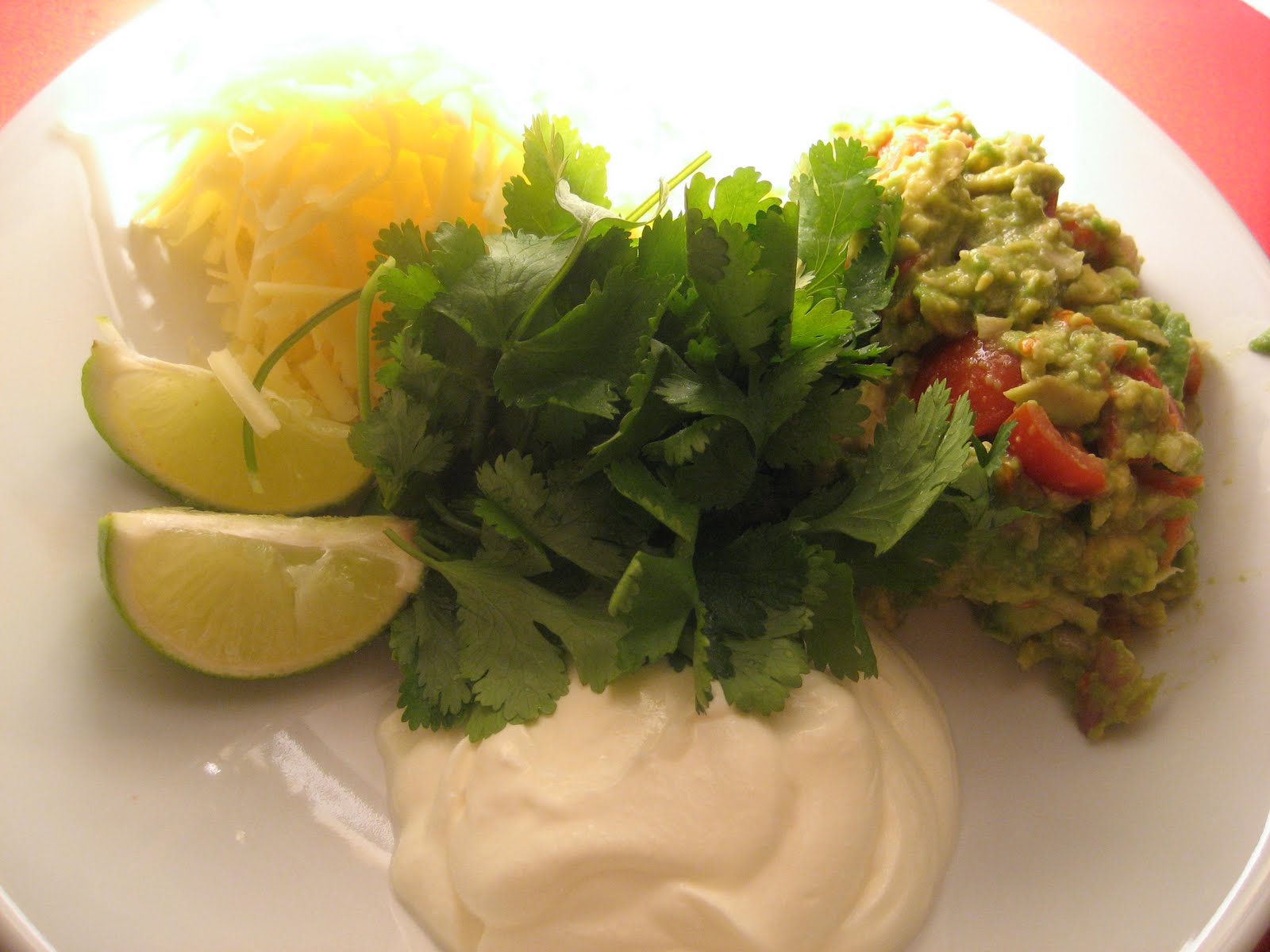
Unwilling to accept defeat, I got started on everything else to go with it. Here's the recipe:
One-Pot Stewed Chicken with Chorizo
Yields 4 portions
Time: 2 hours
- 4 skin-on, bone-in chicken legs with thigh attached (preferably free-range, organic), patted dry with kitchen roll
- 110g (approx.) chorizo sausage (one that has a good kick of heat and plenty of paprika), casing removed, and cut into 1-cm pieces
- 1 Tbs butter
- 3 Tbs olive oil (needn't be extra virgin)
- 1 medium-large white or yellow onion, peeled and sliced
- 2 cloves of garlic, peeled and minced
- 1 Tbs ground cumin
- 1 1/2 tsp ground cinnamon
- 1/2 tsp nutmeg
- 2 tsp tomato paste
- 1 8-oz tin of whole or crushed Italian tomatoes (needn't be seedless)
- 1 Tbs dark muscovado or brown sugar
- 1 Tbs white wine vinegar
- 1 bay leaf
- 3-5 whole cloves
- ideally 2 whole tinned chipotle peppers in adobo, chopped (I had to substitute 2 red chilis, with seeds, minced and 1 tsp chipotle-style hot sauce--not at all the same thing, I know!). This is all to taste, of course. If you're not a fan of chilis, go easy and use just one.
- Salt and ground black pepper
- Tortillas
- Lime wedges, soured cream, guacamole, to serve as accompaniments
It's a laundry list of ingredients, but the idea here is that by combining all of these robust flavours, you'll be left with incredibly tender meat and a rich gravy.
If using the browning method, first heat a skillet on medium-high heat. Add the butter and olive oil and brown the chicken pieces, one-to-two at a time for a few minutes per side, until the skin is browned and starts to crisp. Transfer the chicken to a casserole or a deep pot. Lower the heat to a medium flame and add the sliced onion, stirring occasionally so that they soften and turn translucent rather than brown. Once they're softened, add the garlic and spices (cumin, cinnamon, nutmeg), turning over so that the onions are coated. Add the tomato paste and stir for a further minute or so. Add everything to the chicken in the pot. In the same skillet, raise the heat slightly, and sautee the chorizo until crispy and browned, 2-3 minutes. Again, add this to the chicken, onion, and aromatics.
The skillet can now be retired, and the pot or casserole should be set on a medium-high flame. Add in the tin of tomatoes, sugar, vinegar, bay leaf, cloves, and peppers (or chilis). Give the pot a good stir with a wooden spoon, making sure that all the chicken is coated with liquid, and add enough water so that the liquid is almost level with the chicken. Stir well again and bring the pot to a rapid simmer.
Once the liquid has reached a rapid simmer/boil, turn the heat down to a very low simmer and simmer, covered and stirring occasionally (every 15-20 mins. or so), for at least 1 1/4 hours (up to two hours). As the fat in the chicken and the sausage will rise to the surface during cooking, and there will be an ample amount of it, skim the surface of the simmering liquid with a large spoon, discarding the fat.
If using the browning method, first heat a skillet on medium-high heat. Add the butter and olive oil and brown the chicken pieces, one-to-two at a time for a few minutes per side, until the skin is browned and starts to crisp. Transfer the chicken to a casserole or a deep pot. Lower the heat to a medium flame and add the sliced onion, stirring occasionally so that they soften and turn translucent rather than brown. Once they're softened, add the garlic and spices (cumin, cinnamon, nutmeg), turning over so that the onions are coated. Add the tomato paste and stir for a further minute or so. Add everything to the chicken in the pot. In the same skillet, raise the heat slightly, and sautee the chorizo until crispy and browned, 2-3 minutes. Again, add this to the chicken, onion, and aromatics.
The skillet can now be retired, and the pot or casserole should be set on a medium-high flame. Add in the tin of tomatoes, sugar, vinegar, bay leaf, cloves, and peppers (or chilis). Give the pot a good stir with a wooden spoon, making sure that all the chicken is coated with liquid, and add enough water so that the liquid is almost level with the chicken. Stir well again and bring the pot to a rapid simmer.
Once the liquid has reached a rapid simmer/boil, turn the heat down to a very low simmer and simmer, covered and stirring occasionally (every 15-20 mins. or so), for at least 1 1/4 hours (up to two hours). As the fat in the chicken and the sausage will rise to the surface during cooking, and there will be an ample amount of it, skim the surface of the simmering liquid with a large spoon, discarding the fat.
 Place a strainer over another deep saucepan and drain the entire contents of the pot into the strainer. Pull out the chicken and reserve. Press the sausage and onion and spices against the strainer to release any other juices and set the sausage-tomato-onion remnants aside to serve later, if desired.
Set the strained liquid in the saucepan onto a high heat so that it begins to reduce to at least half its original volume. Once reduced, taste for seasoning, adding salt and pepper as needed.
Pick all of the meat off of the chicken, discarding any bones or skin. Try not to eat it all in the process! The meat should fall away from the bone.

Once the sauce is reduced, how you serve this dish is up to you! I returned the chicken to the reduced sauce and served in warm tortillas with a squeeze of lime, coriander, soured cream, and tomatoes. You'll have just spent a lot of time developing that rich gravy, so there's no need to add much to it. Another variation might be to serve the chicken pieces whole, with the sausage, onions and gravy over the top (remember to pick out the bay leaf!), with rice or couscous.
 While perhaps a bit time consuming, the overall effort is minimal and the flavours robust--part sweet, part smokey and hot from the sausage and chipotles, part tangy from the vinegar and tomatoes, and the chicken is melt-in-the-mouth. It is a satisfying weekday supper, even when the avocados are brown!
 With thanks to E. for her help with the recipe!


 Posts
Posts


